Upon the release of the trailer for the much anticipated Dark Knight Rises, Nolan’s final Batman film, there was a particular piece of dialogue from one Selina Kyle portrayed by Anne Hathaway which drew connections to the protests seen in Occupy Wall Street and the uprisings of the Arab Spring.
"When it hits, you're all going to wonder how you ever thought you could live so large and leave so little for the rest of us".
(I love that rhythmic tribal like chanting, makes ya wanna tear shit up)
I couldn’t help but remember some pictures of Hathaway taking part in an Occupy protest, and you have to wonder how much of a coincidence could this really be.

The film finished shooting in the middle of November, so the filming has basically coincided with the recent Occupy movement. With the script, Jonathan and Christopher Nolan obviously had a little foresight to see the RISING (ho, ho) tensions between the oligarchy and everyone else, and like any socially aware filmmaker, they would want to mimic current events on the screen, thereby showing that the Nolans have their fingers on the pulse of the public conscious at large. Or, is the parallel simplistic and shallow, with no more than the aesthetic appearance of social commentary?
Some of the very best science fiction is a mirror to real society, sometimes showing us parts of ourselves that we don’t want to see. I can choose to read further into the apparent parallel that the Nolans are attempting to draw. Is Anne’s portrayal then of Catwoman to be representative of a more direct frustration, like in Tracy Chapman’s song, “people gonna rise up, take what’s theirs”, a person who is no longer content for the haves to lord their wealth over the have nots? If Anne’s opinions lead her in support of the Occupy movement, did her political views play a hand in Christopher Nolan picking her for the role of Catwoman?
Christopher Nolan’s Batman films succeed largely in part because of Nolan’s ability to see past the simple theatrics of past portrayals -
(Joel Schumacher's unfortunate pun-filled Batman and Robin),
- Nolan can see past the costume and the gadgets, and he can reveal the deeper themes. In The Dark Knight, the iconic Batman vs. Joker rivalry is not a simple black and white paragon of good vs. evil. It’s about two diametrically opposed aspects of human nature. Wayne is a character who lives and breaths a personal philosophy, he strives to better himself, and to better the environment around him, adhering to strict control over himself and his code. The Joker shows the futility of that control by leading to the downfall of Dent, and by revelling in total freedom from any type of code.
So, what would Nolan’s intention be in mirroring a divided class system, and a world changed by revolutions? If Catwoman is the frustrated 99%, does that mean Batman is the 1%? Previously, we’ve seen Batman represent the worst aspects of the USA. In the last decade, we have seen numerous examples of the US government ignoring international law as well as their own law. Their congress, against their own Constitutional law, has not been called to vote on the participation of any of the wars the country has placed itself in. They have imprisoned people without trial, grabbing them from various nations, and have tortured them. Batman does things that cannot be done within the law - entering Hong Kong to effectively kidnap a criminal, torturing criminals for information, and spying on the people of Gotham. These are things to which some would argue are “necessary evils“, but it also raises the question of how we can trust someone with that level of power to do the right thing? Americans are increasingly losing freedoms for the sake of security. The controversial TSA groping as one example, and the recent bill to imprison US citizens indefinitely.
The Civil War storyline by Marvel comics published from 2006 through to 2007 was an attempt to play on the economic and political tensions of the time, which have only grown since, and parody the divisiveness in society by having superheroes go to war with each other over a question of individual freedom vs. security.

The man many would credit as defining Batman as an adult, gritty, dark property would be Frank Miller with his work in the 80‘s on The Dark Knight Returns and Batman: Year One. He has recently come out very much against the Occupy movement - to a degree that actually almost appears satirical in Miller’s use of stereotyped language to describe those he disagrees with and the fearful paranoia which he holds for Islam.
The other big name that many would consider largely responsible for comic books being taken seriously as an adult literary format is Alan Moore. Miller and Moore couldn’t be more different, in terms of style, prose, and political opinion. Moore openly supports the Occupy movement and shows a certain amount of pride in the fact that so many wear the ‘V For Vendetta’ Guy Fawkes masks as symbols of their revolutionary spirit. Moore really tore into Miller. The divisions in society are not just portrayed on the pages of comic books but are present between the authors of those books.
Comic books and superheroes continue to be an effective parody of our real world issues, giving mythical imagery to what are otherwise intangible ideas.
Moore and Miller's best works within comic books are many years behind them and I feel that contemporary comic books of recent years more often than not shy away from more direct social and political issues. Ed Brubaker, to his credit, was ballsy enough to parody the certain members of the Tea Party movement as fear driven racists within the pages of Captain America, of all things.
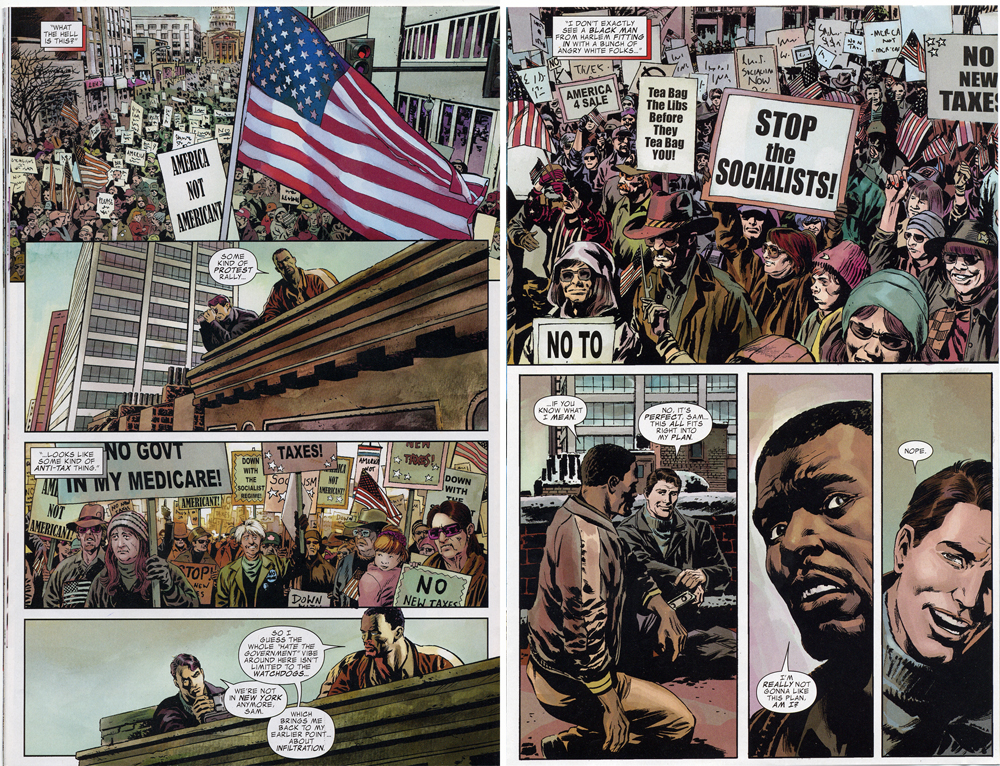
And if you think Brubaker was wrong, then it would be informative to take a look at what polling reveals on the opinions on race from Republicans in Mississipi. http://www.latimes.com/news/politics/la-pn-poll-obamas-a-muslim-to-many-gop-voters-in-alabama-mississippi-20120312,0,334348.story?track=rss
Marvel issued an apology over the comic.
Only a couple of years previous to this, Belfast born writer Garth Ennis got away with more than heavily implying that George Bush was just one bullet away from the Punisher. Which to me raises an interesting question - could you imagine the shit storm, if the Punisher were to kill a member of the 1% in the comic books? A figure, say, similar to John Corzine, who ‘lost’ billions of his customers money, effectively committing fraud on a large scale against the public, a man who for all intents and purposes belongs in prison. Could you parody a figure like that, and then put them under some cross hairs?
I think that when writers, artists, and filmmakers take bold steps towards commenting on the state of our world, they provide a valuable service in terms of informing and inspiring people, and sometimes even improving the world. Many years later, the message can have all the more relevance, which is revealing of the genius of artists past. George Orwell, Charlie Chaplin, and comic book writer Chris Claremont with his ground breaking work on X-Men. It was Claremont who really laid the ground work for the X-Men as a parallel to discrimination - any kind of discrimination, of people who are different. Claremont did not shy from likening the struggle of the X-Men to civil rights. In the pages of God Loves, Man Kills a man refers to Kitty Pryde as a 'mutie', a black friend of Kitty's asks her to calm down, that it is only a word. To which Kitty responds;
"Suppose he called me a Nigger-Lover, Stevie?! Would you be so damned tolerant then?!!"
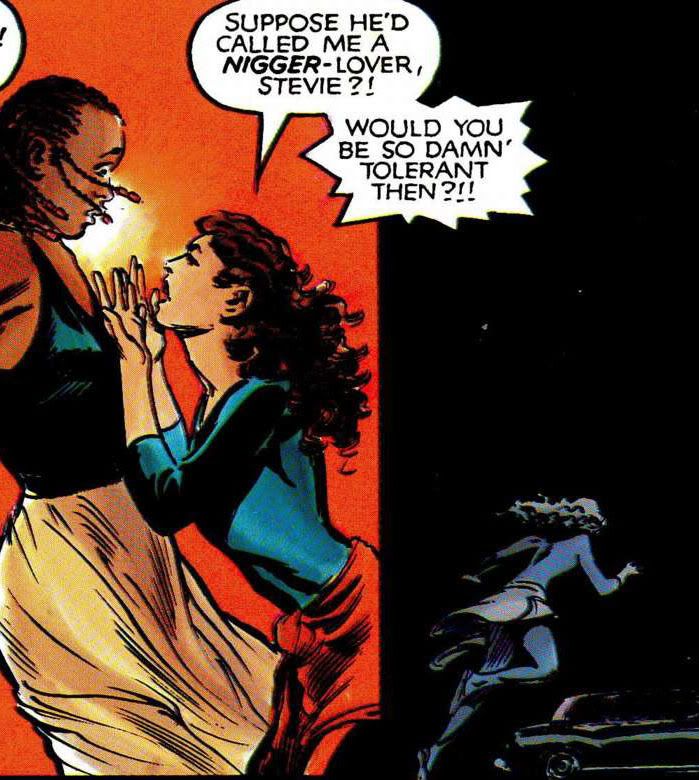
Imagine THAT line in one of the X-Men movies.
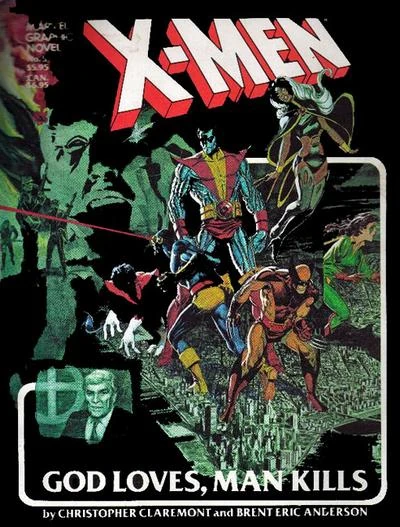
Read the pages of God Loves, Man Kills, and tell me that the preacher William Stryker’s mad prose does not strike an uncanny resemblance to the rantings of Glenn Beck and Rush Limbaugh.

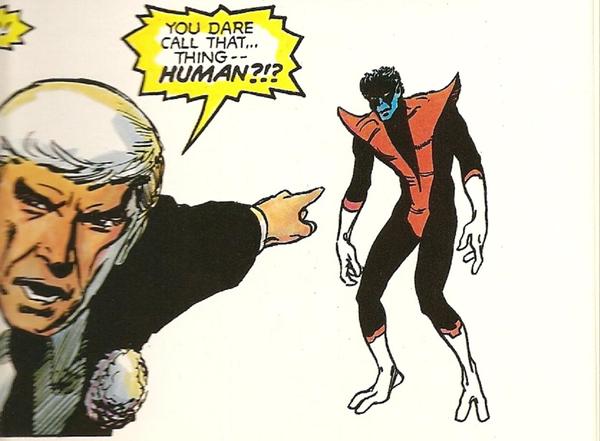


The perfect balance in the X-Men mythology is when we understand contrasting views. It is easy to understand why the sight of dead children angers Magneto to the point of wanting to kill those responsible. And later in the book, it is easy to understand why non-violence can be a powerful statement towards those who hate you for virtue of being born. It raises an intelligent discussion on whether or not violence begets violence.
I want to see contemporary science fiction filmmakers and writers being more bold. A superhero story can be light and fun for the masses but it can also send a direct message, a message that can easily be understood and digested even for the children in the audience. Sometimes I don't understand why society seems so afraid to protect children from violent imagery and ugly language when in the correct circumstances it can serve to inform. An example of this in both literature and film would be Harper Lee's story To Kill A Mockingbird. A perfect book, and a perfect film adaptation, that I think parents ought to share with their kids.
I look forward to seeing what kind of social commentary Christopher Nolan is apparently going for in The Dark Knight Rises and whether or not it will be something valuable to discourse or if it will just simply be a superficial pretense.

No comments:
Post a Comment